|
1
|
- 6 June, 2007
- Release Review revision 2.3.1 – 17 January, 2007
|
|
2
|
- Talking Points
- Features
- Non-Code Aspects
- APIs
- Architectural Issues
- Tool Usability
- End-of-Life
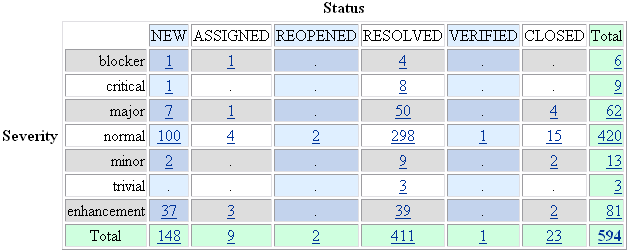
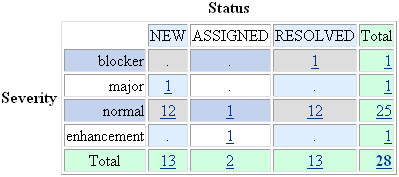
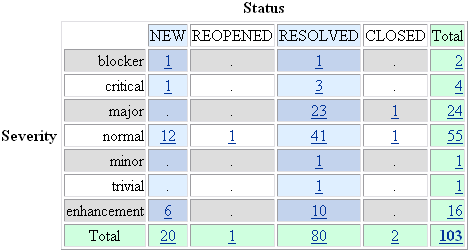
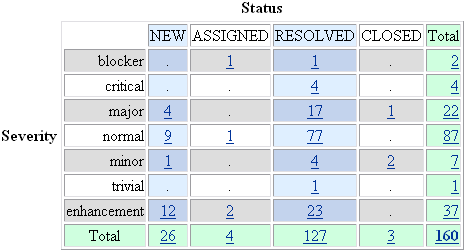
- Bugzilla
- Standards
- UI Usability
- Schedule
- Communities
- IP Issues
- Project Plan
|
|
3
|
- MDT 1.0 Themes
- Appeal to a Broader Community
- Be a Better Platform
- Make Simpler to Use
- Restructure Modeling Components
- Increase Modeling Component Cohesion
- Enable Consistent Multi-Language Support
- The project lead certifies that the requirements for Eclipse Quality
APIs have been met for this release
- End-of-life issues
- RDF/OWL editors no longer available in EODM 0.9
- org.eclipse.emf.ocl plug-in (OCL 1.0 API) deprecated, but continuing
viability guaranteed
- http://www.eclipse.org/uml2/2.0.0/UML namespace URI now obsolete,
superseded by http://www.eclipse.org/uml2/2.1.0/UML
- All significant contributions, non-Committer code contributions, and
third-party libraries have received IP clearance
- 1080: original 3rd-party code contribution
- 1081: use by MDT project
- 15 committers from two companies (Borland, IBM) in three countries
(Canada, China, Czech Republic)
|
|
4
|
- 1.0 development plan available at http://www.eclipse.org/modeling/mdt/docs/plans/mdt_project_plan_1_0.html
- 24 committed, 7 deferred
- New & Noteworthy documentation at http://wiki.eclipse.org/index.php/MDT_1.0_New_and_Noteworthy
- Release notes available at http://www.eclipse.org/modeling/mdt/news/relnotes.php?project=
|
|
5
|
- 5 committed, 0 deferred
- Appeal to a Broader Community
- Standard Compliance. Implement the new package structure and ontology
metamodel of RDF and OWL conforming to the ODM specification.
- Dynamic Typing. Allow objects representing RDF/OWL resources to change
type.
- RDF/OWL Parsing and Serialization. Provide support for parsing and
serialization in RDF/XML format.
- RDF/OWL Reasoning. Provide support for RDF/OWL reasoning.
- Increase Modeling Component Cohesion
- RDF/OWL Transformation to/from Ecore. Provide a mechanism to transform
RDF/OWL models to/from Ecore.
|
|
6
|
- 7 committed, 2 deferred
- Appeal to a Broader Community
- Stand-alone Support. Provide a stand-alone (Eclipse-free) OCL build.
- Be a Better Platform
- Parsing API. Provide a public API for parsing OCL documents, with the
complete context declaration syntax.
- EMF 2.3 / J2SE 5 Support. Adopt EMF 2.3, including regeneration of the
OCL metamodel.
- Make Simpler to Use
- Improved Documentation. Develop a complete Programmer’s Guide for the
OCL component.
|
|
7
|
- Restructure Modeling Components
- LPG. Consume LPG runtime library from the Orbit project.
- Increase Modeling Component Cohesion
- Integration with UML. Provide support for parsing and evaluating OCL
constraints and expressions on the UML metamodel.
- Enable Consistent Multi-language Support
- ICU4J. Isolate and minimize dependency on ICU4J; ensure support for the
“thin” variant of ICU4J.
|
|
8
|
- 7 committed, 3 deferred
- Appeal to a Broader Community
- Static Profile Definition. Provide a way to specify that a profile
definition be generated using EMF; this would allow, among other
things, support for custom data types and derived stereotype
properties.
- Be a Better Platform
- Ant Task for Ecore Importer. Provide an Ant task for the UML Ecore
importer, similar to those provided for the Rose and Ecore importers in
EMF.
- Make Simpler to Use
- Create Child/Sibling Menu Reorganization. Reorganize the ‘Create Child’
and ‘Create Sibling’ menus of the UML editor so that the items are
grouped by feature.
- Improved Documentation. Improve documentation by updating the FAQ,
enhancing the Javadoc, and publishing new articles.
|
|
9
|
- Increase Modeling Component Cohesion
- Eclipse 3.3 / EMF 2.3 Compatibility. Maintain release currency
concurrent with EMF 2.3 (and Eclipse 3.3); make changes as required to
align with EMF features and bug fixes, in particular support for Java
SE 5.0.
- XML Primitive Types. Provide a model library to represent the types
defined in the XMLType metamodel in EMF; be sure to update Ecore/UML
converters to make use of this new library.
- Integration with OCL. Integrate support for parsing and evaluating OCL
constraints and expressions.
|
|
10
|
- 4 committed, 1 deferred
- Appeal to a Broader Community
- Class Diagrams. Provide a GMF-based editor for UML class diagrams.
- State Machine Diagrams. Provide a GMF-based editor for UML state
machine diagrams.
- Component Diagrams. Provide a GMF-based editor for UML component
diagrams.
- Activity Diagrams. Provide a GMF-based editor for UML activity
diagrams.
- Other
- Profile Definition Diagrams. Provide a GMF-based editor for UML profile
diagrams.
|
|
11
|
- 1 committed, 1 deferred
- Appeal to a Broader Community
- Java™ SE 5.0 Support. Exploit new Java language constructs; use
generics (e.g. EList, EMap and implementations); generate and merge
Java 5 constructs; investigate enumerations and annotations.
|
|
12
|
- All components hosted at single Web site, Wiki
- XSD still needs to be migrated to MDT CVS module
- Documentation (FAQ, Javadoc, articles, etc.) available for EODM, OCL,
UML2, XSD (UML2 Tools TBD); updates complete or underway
- Example features/plug-ins available for all components
|
|
13
|
- The project lead certifies that the requirements for Eclipse Quality
APIs have been met for this release
- Non-API in “internal” namespace
- Some ‘discouraged access’ warnings in cases of metamodel extension
(plug-in compatibility restricted to minor version)
- OCL, UML2, XSD APIs updated to support Java 5.0
- EODM APIs are “provisional”, incompatible with previous release due to
compliance with new draft of the ODM specification
- New convenience APIs introduced in UML2
- GMF Runtime represents bulk of API for UML2 Tools
|
|
14
|
- To support RDF graphs and dynamic typing, EODM implementation changed to
make use of internal core objects and Java proxies – hence code
generation not used/possible
- OCL now consuming LPG Java Runtime from Orbit
- UML2 schema changes introduced to address bidirectional association
issues [185602]
- GMF resources available for UML2 Tools to support code regeneration; 80
% generated code (including custom templates), 15 % pluggable custom
code, 5 % @generated NOT code
- XSD partitioned into finer-grained features
- No generics support for XSD transformation to/from Ecore
|
|
15
|
- Major OCL usability issue, lack of documentation, addressed with
introduction of Programmer’s Guide
- UML editor (create child/sibling menus), exporter usability improved
- GMF-based editors introduced for activity, class, profile definition,
and state machine diagrams
|
|
16
|
- RDF/OWL editors no longer available in EODM 0.9
- org.eclipse.emf.ocl plug-in (OCL 1.0 API) deprecated, but continuing
viability guaranteed
- http://www.eclipse.org/uml2/2.0.0/UML namespace URI now obsolete,
superseded by http://www.eclipse.org/uml2/2.1.0/UML
|
|
17
|
|
|
18
|
|
|
19
|
|
|
20
|
|
|
21
|
|
|
22
|
|
|
23
|
- Ontology Definition Metamodel (ODM) 1.0 specification finalization
underway; EODM 0.9 compliant with working draft
- Object Constraint Language (OCL) 2.1 revision underway; OCL 1.1
compliant with 2.0 formal version
- Unified Modeling Language (UML) 2.2 specification revision underway;
UML2 2.1 and UML2 Tools 0.7 compliant with 2.1.1 formal version
- XSD compliant with XML Schema W3C standard
|
|
24
|
- MDT 1.0 conforms to Eclipse User Interface Guidelines
- Eclipse platform standard i18n support used where applicable/possible;
stand-alone deployment uses equivalent J2SE APIs
- ICU4J is used but optional; stand-alone deployments delegate to
corresponding J2SE 5.0 APIs when ICU not available
- As with all Europa projects, language packs will be created as part of
an Eclipse Globalization Project
- Eclipse platform APIs used to provide accessible UI
|
|
25
|
- As a whole, MDT is a “+2” project, but should probably be “+3” or “+4”
based on its dependencies
- M3 met on November 16
- M4 slipped from January 4 to January 22
- M5 met on February 23
- M6 slipped from April 6 to April 10
- M7 slipped from May 18 to May 24
|
|
26
|
- Increased interaction in Bugzilla and on newsgroups
- MDT represented at EclipseCon 2007 (short/long talks, tutorials)
- Coordination with Topcased open source project
- Continued efforts to expand user communities for EODM, UML2 Tools
- MDT is among the most active projects at Eclipse
|
|
27
|
- The MDT project leadership verifies that:
- the about files and use licenses are in place as per the Guidelines to
Legal Documentation.
- all contributions (code, documentation, images, etc) have been
committed by individuals who are either Members of the Foundation, or
have signed the appropriate Committer Agreement. In either case, these
are individuals who have signed, and are abiding by, the Eclipse IP
Policy.
- all significant contributions have been reviewed by the Foundation's
legal staff.
- all non-Committer code contributions, including third-party libraries,
have been documented in the release and reviewed by the Foundation's
legal staff.
- all Contribution Questionnaires have been completed.
- the "provider" field of each plug-in is set to
"Eclipse.org“.
- the "copyright" field of each feature is set to the copyright
owner (the Eclipse Foundation is rarely the copyright owner).
- any third-party logos or trademarks included in the distribution
(icons, help file logos, etc) have been licensed under the EPL.
- any fonts or similar third-party images included in the distribution
(e.g. in PDF or EPS files) have been licensed under the EPL.
- The MDT project IP log is located at http://www.eclipse.org/modeling/mdt/eclipse-project-ip-log.csv
|
|
28
|
- Draft development plan for MDT 1.1 not yet available
|
|
29
|
- UML is a trademark of the Object Management Group
- XML is a trademark of the World Wide Web Consortium
- Java and all Java-based trademarks are trademarks of Sun Microsystems,
Inc. in the United States, other countries, or both
- Other company, product, or service names may be trademarks or service
marks of others
|

 Notes